


 One of the things I see very important is user adoption. We can develop brilliant technologies, but if nobody uses it, the value of these technologies will be very low. I see Process Technologies as very important for the Product Lifecycle development… One of the problems I see today is that there is inconsistence between the definition of the Process and its usage.
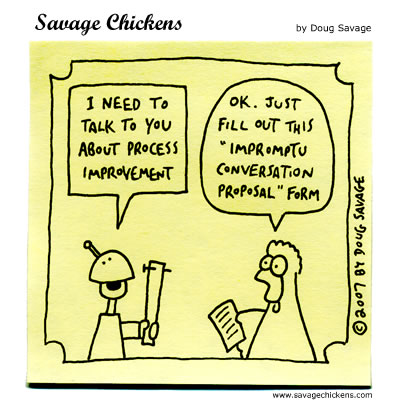
I think definition side of “process technologies” works very well. We can define who is doing what and when, how information is flowing and many other details. But as soon as we start this process, many things change. People move, new tasks and changes appear, and at the end it’s not easy to understand what is going on, how to execute, monitor and manage the changes in this process. Therefore, at the end, many of processes slap and become very formal or less usable. So, what can we do in order to prevent it?
I’d propose three steps that can improve Business Process Technology adoption:
- Flattering Processes Definition. A process needs to become more modular, simple and changeable.
- Simplification of the User Interface. We need to remove complexity. Simple… Actually, users need a list of tasks to perform on daily basis and a list of follow up tasks. We need to massively use mobile and other alternative communications and collaboration tools to allow users to follow up the processes.
- Flexibility and Change. Changes will come very fast. Life and organizational processes are really dynamic. Process implementation must allow managing those changes. It should be easy-to-make step. We need to be able to re-assign people, change/cancel tasks and to change the process itself.
So, what do you think?



Pingback: How to increase “Business Process Technology” Adoption Rate for … | Softdown.us()
Pingback: How to increase “Business Process Technology” Adoption Rate for … | Softdown.us()
Pingback: Business Process Management, PLM and Open Source Track()
Pingback: Business Process Management, PLM and Open Source Track « Daily PLM Think Tank Blog()
Pingback: Business Process Management, PLM and Open Source Track | Business Process and Adaptive Case Management News and Information()
Pingback: Business Process Management, PLM and Open Source Track … | Business Process and Adaptive Case Management News and Information()